
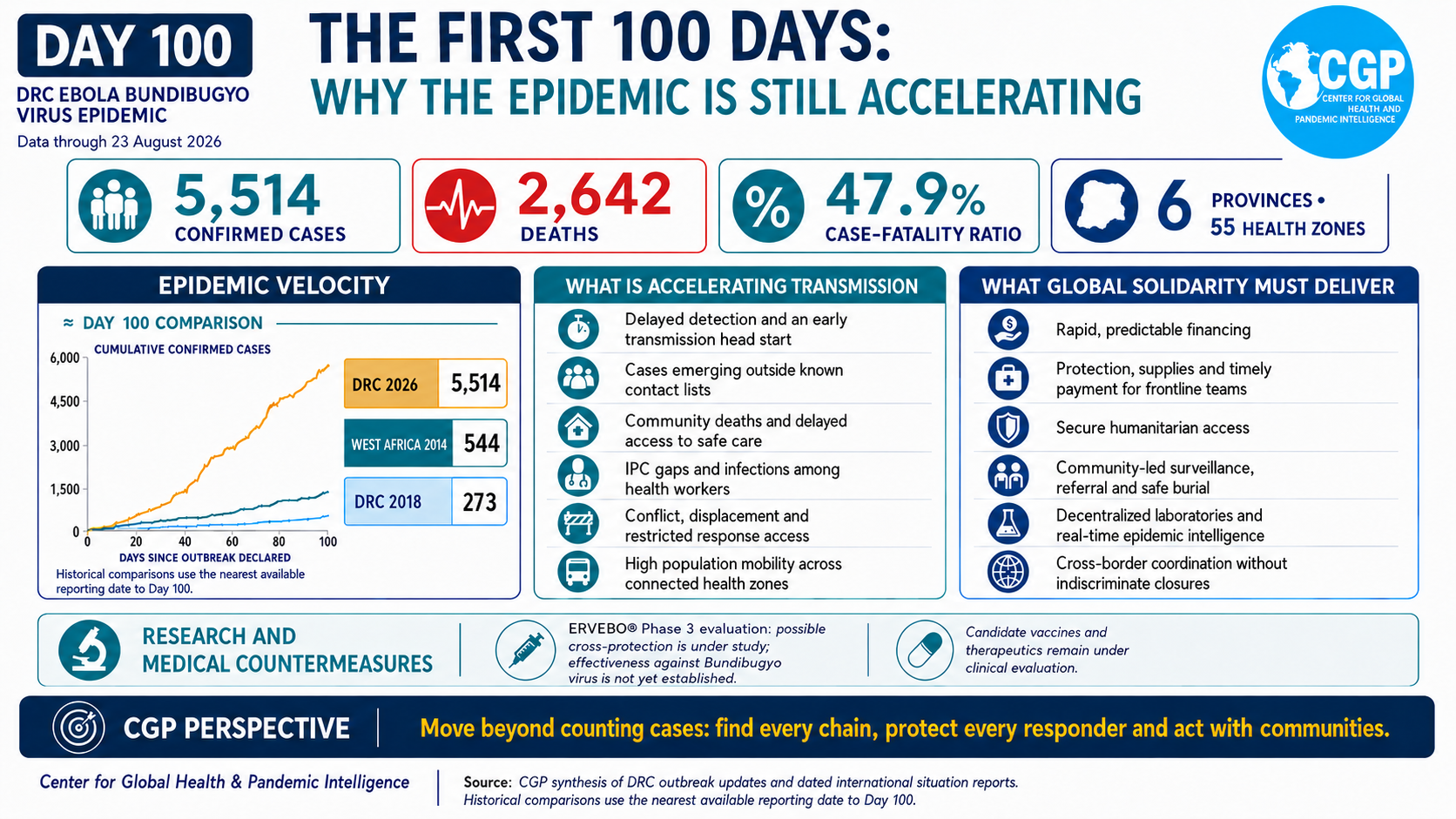
The First 100 Days: Why the DRC Ebola Epidemic is Still Accelerating
One hundred days after the DRC declared an outbreak of Bundibugyo virus disease, the epidemic is still spreading, with approximately 5,515 confirmed cases and 2,642 deaths reported, representing a case-fatality ratio of nearly 48%. The outbreak has already exceeded the DRC's 2018–2020 outbreak in confirmed cases.
One hundred days after the Democratic Republic of the Congo declared an outbreak of Bundibugyo virus disease on 15 May 2026, the epidemic is still spreading. It is expanding geographically, overwhelming parts of the health system and exposing persistent weaknesses in the world's ability to contain outbreaks in fragile and conflict-affected settings.
By the end of the first 100 days, approximately 5,515 confirmed cases and 2,642 deaths had been reported, representing a case-fatality ratio of nearly 48%. The epidemic has already exceeded the DRC's 2018–2020 outbreak, which recorded 3,317 confirmed cases over almost two years.
The progression has been extraordinary. Confirmed cases increased from 85 on 21 May to 515 by 6 June, 1,460 by 1 July, 3,605 by 30 July and more than 5,500 by the end of the first 100 days.
There is currently no published evidence that the virus has acquired substantially greater intrinsic transmissibility. The more scientifically plausible explanation is that a virus with known transmission characteristics is exploiting an exceptionally permissive and fragmented social-operational environment.
The outbreak had a substantial head start: The first known patient developed symptoms on 24 April, several weeks before the outbreak was confirmed. Delayed recognition allowed the virus to spread through households, health facilities and communities before an Ebola-specific response was fully activated.
According to the World Health Organization, an average of nearly 90 confirmed cases were recorded daily during the first three months, a rate higher than the 2018–2020 outbreak in the DRC. The outbreak now affects six provinces, with Ituri remaining the epicentre, accounting for around 85 per cent of cases and 79 per cent of deaths.
The epidemic is unfolding amid a wider humanitarian crisis, where communities face malnutrition and lack access to safe drinking water. "People are hungry; they need access to food; they need water," underscored Dr. Marie Roseline Belizaire, WHO Regional Director for Emergency Response in Africa. "Humanitarian aid must also be provided alongside the Ebola response."
Insecurity, displacement, attacks on health facilities and difficulties in accessing care continue to hamper the response. Deaths occurring outside Ebola treatment centres accounted for around 60 per cent of the 260 weekly deaths recorded over the last six weeks. This figure highlights the ongoing difficulties in detecting cases early, referring patients swiftly to healthcare facilities and ensuring they have access to treatment.
Despite these challenges, the response has grown considerably in scale and capacity. The testing network has expanded from a single site to 19 laboratories now capable of analysing more than 3,000 samples daily. Treatment capacity has jumped from fewer than 10 beds to over 1,300. Community engagement activities have reached more than 2.5 million people, and contact tracing has climbed from nine per cent in the first week of the outbreak to 84 per cent as of 18 August.
Dr. Javid Abdelmoneim, international president of MSF, emphasized the need for community-centered approaches: "This outbreak continues to spread at a rate that the response cannot keep up with. Treatment centres remain essential to save lives, but this response requires much more than additional beds. It requires better screening, safe isolation of sick people and their contacts, and support for health professionals. It is essential that the response be developed with communities and not without their participation."
The current outbreak trajectory underscores the urgent need to continue to scale up evidence-based Ebola control measures, such as rapid case and contact identification, expansion of diagnostic capacity, improvement of infection prevention and control in health care settings, adoption of safe and dignified burials, strengthening of cross-border surveillance and coordination, and community engagement.
Comments
Loading comments…